
An ASQ White Paper
The notion that innovation and quality are somehow mutually exclusive occurs with some regularity in reporting about current trends in business management. Pronouncements that activities designed to increase quality are bound to stifle innovation and creativity tend to reinforce the unwritten and unquestioned axiom that quality and innovation are incompatible.
This paper tests that assumption by examining the relationships between quality and innovation. It begins by defining what ASQ means by innovation. It looks at contemporary thinking on innovation and on the scope of quality today. It examines recent cases where quality methodologies have been applied in innovation-intensive environments such as commercial research and development, and it gathers insights from approaches of companies that are acknowledged leaders in both innovation and quality. The paper concludes by distilling some of this knowledge into some tips and recommendations for ways that organizations can strike a productive balance between creativity and innovation on the one hand and quality, efficiency, and control on the other.
ASQ believes that quality and innovation have much in common, and that the quality tools and approaches that transform both manufacturing and service businesses can play a key role in ensuring that the innovative capabilities of any organization can be harnessed for maximum value. ASQ’s interest in innovation demonstrates its commitment to making a difference in the world by fully utilizing the transformative power of quality methods for making the world a better place.
Setting the Stage: A Lingering Perception
Controversy over the effects of quality disciplines on innovation and creativity was stoked by some highly visible reporting in the business press on an attempt to introduce Six Sigma methodologies within the R&D functions at 3M.
PURCHASE PARTNERS PRESS INFO
January 18, 2013 - PRWeb Release: Announcing Ezorder.biz: The Online Catalog for Tools and Component Parts
October 20, 2012 -- Purchase Partners Announces it will Supply Construction Anchors from Powers® Fasteners on their EZORDER.BIZ website
October 19, 2012 -- Purchase Partners Announces it will Supply Strong-Point Fasteners from Intercorp on their EZORDER.BIZ website
October 16, 2012 -- Announcing EZORDER.BIZ
Full-Line OEM Distribution Business, Specializing in Vendor Managed Inventory, Integrated Supply Partnerships and Turnkey Purchasing Solutions, Supplying Component Parts, Standard or Special, Uniquely Packaged, Assembled or Fabricated
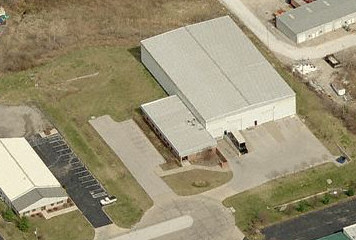
Purchase Partners is a wholly owned subsidiary of McLaughlin Metal Sales Company, Inc. Since 1971, the McLaughlin Group has been servicing large, quality customers like you. Originally known to manufacturers in the Midwest, our reputation has grown in the Southwest, South, and Rocky Mountain regions, too.
In 1988, McLaughlin Metal Sales expanded their products offered by acquiring Grenada Fasteners, a small cold-heading plant in Mississippi. By November 1989, one more company was added in St. Louis, known today as Purchase Partners®.
The initial purpose of the new company, Purchase Partners®, was to compliment our domestic manufacturing plant with a Full-Line Distribution Business supplying domestic and offshore products.
The evolution of our business came one step further in 1991 by redirecting our business position from Commodity Supplier to one of Material Management Partner. Purchase Partners is fully committed to being the Leading Supply Partner for Vendor Managed Inventory Systems in the OEM market. Through all of our products, services and relationships, we are committed to forging a unified and synchronized supply chain.
Today we operate three divisions: Purchase Partners® , Purchase Partners of Asia™, and McLaughlin Metal Sales Company, Inc., and have sales exceeding $70 Million dollars annually and Growing!
Our efforts are dedicated to future growth -- yours and ours and we know the best way for our company to grow profitably in the future is to enhance the productivity of our partners.
| TYPE A POINT: A thread forming screw for use in thin metal .015 to .050 thick. Used with drilled, punched or nested holes in sheet metal, resin impregnated plywood, asbestos combinations, among others. Not recommended for new design. | |
 |
TYPE B POINT: A thread forming screw for use in heavier metal .050 to .200 thick. Larger root diameter with finer thread pitch for light and heavy sheet metal non-ferrous castings, plastics, impregnated plywood, asbestos combinations, and other materials. |
| TYPE |
|
 |
CONE POINT: A precision forming operation to provide any required included angle. Offers a smooth surface, accurate length, and a sharp point which can be produced to any desired contour to fit your particular requirements. |
 |
PINCH POINT (ROUNDED): An inexpensive method of applying a 40°, 60° or 90° lead-in point having a slightly rounded contour but with pinch-off marks on its surface. Used for aligning several sheets or assembling several parts requiring pilot action. |
 |
NAIL POINT (PINCHED): Usually supplied with an approximate 45° included angle having a sharp point and slightly squared surface. Used for impinging or locking against wood or other soft material. Other degrees of included angle and sharpness also available. |
 |
DOG POINT: A straight pointed section reduced in diameter slightly below the root diameter of the thread, usually extending in length about two-thirds the diameter of the thread. Recommended for ease in starting, to insure against stripping fine threaded products, and to increase efficiency along production lines. |
 |
DIE POINT: One of the least expensive pointing operations applied at the time of heading. This operation provides an end chamfer starting with a diameter smaller than the root diameter of the thread. The minimum reduction of the point is approximately 10% below the maximum minor diameter with an included angle of 40 to 50. |
 |
CUPPED POINT: A special cup section supplied on the end of the threaded member having a depression in the end to reduce the area in contact with the surface which increases its holding and locking power under pressure. |
 |
SELF-DRILLING: With special drilling points – lengths – diameters that will drill through ¼” metal. Eliminates all hole preparation – drills faster than a drill. No punching, drilling or tapping required. Reduces die costs. |
 |
SELF-PIERCING: Produces more secure sheet metal assemblies faster…used as self-drilling screw or driving thru pre-punched holes. Can be used with or without pilot holes. Positive rake “forward cutting edge" drills straight thru sheet metal at peak speed. Perfectly mated threads increase strip and back out pressures. |
 |
TYPE U POINT: A thread forming screw with high Helix thread for driving or hammering into sheet metal, castings, fiber or plastics for permanent, quick assemblies. |
 |
TYPE C POINT: A thread forming screw with either coarse or fine pitch machine screw thread and blunt tapered point. Eliminates chips and permits replacement with standard screw in the field. Higher driving torque required. Usable in heavy sheet metal and die castings. |
 |
TYPE F POINT: A thread cutting screw with machine screw thread with blunt tapered point, having multi-cutting edges and chip cavities. For heavy gauge sheet metal aluminum, zinc and lead die castings, cast iron, brass and plastic. |
 |
TYPE FZ POINT: A thread cutting screw with a tapping screw thread with blunt tapered point and multi-cutting edges and chip cavities. For plastics, die castings, metal clad and resin impregnated plywoods, and asbestos. |
 |
TYPE 1 POINT: A thread cutting screw with single flute for general use. Produces a fine standard machine screw thread for field replacement. |
 |
TYPE 17 POINT: A thread cutting screw for wood with a coarse tapping screw thread and a special long sharp point fluted to capture chips. |
 |
TYPE 23 POINT: A thread cutting screw in the fine thread series offering maximum thread cutting area and excellent chip clearing, with minimum tightening torques. |
 |
TYPE 25 POINT: A thread cutting screw similar to Type 23 point except with coarse Type B thread. For plastics and other soft materials with large chip clearing and cutting edges. |
 |
Technical Glossary |
| air dryer | A device that extracts moisture from the air. Shops that use compressors may have to use air dryers to keep shop air free from moisture. |
| A type of steel that contains another material that is added intentionally to improve the properties of the metal. | |
| aluminum | A silvery, white metal that is soft, light and is electrically and thermally conductive. |
| assemble | To join or fit together. |
| assembly | The process in which two or more objects are joined together. |
| assembly line | A process in which products are mass-produced in stages. |
| automatic fastening tool | A power tool, usually a screwdriver, that is automatically supplied with fasteners. The tool can be guided by an operator or a machine. |
| automatic-shutoff screwdriver | A screwdriving tool that uses a continuous-drive clutch and results in little torque reaction. Automatic-shutoff screwdrivers are used for repetitive, but precise applications. |
| axially assembled snap ring | A snap ring that is assembled by fitting the ring over the end of a shaft or through the opening of a hole. |
| axis | An imaginary straight line that passes through the center of an object. |
| bar key | A long rectangular device with parallel sides and precise dimensions that is inserted into a matching keyway and key slot. Bar keys are typically used to assemble gears, handles, wheels, or similar components onto a shaft. |
| batch | A specific quantity to be produced. Batch-model assembly lines produce products in groups. |
| batch-model assembly line | A type of assembly line in which products are assembled in groups at a time. |
| battery-powered tool | A tool powered by a battery. Battery-powered tools are the most portable of all the power tools. |
| bearing surface | The circular underside of the bolt head that makes contact with the part. |
| bearing surface | The circular underside of the bolt head that makes contact with the part. |
| binding head | A type of head that is similar to the pan head but much thicker with a deeper slot. |
| blind hole | A hole that does not pass through a component and has only one opening. |
| blind rivet | A type of rivet with a tubular shank that is installed with access to only one side of the part. Blind rivets are generally used to simplify assembly and to improve appearance. |
| bolt | A cylindrically shaped, threaded device used for fastening parts. Bolts usually have blunt ends and mate with a nut. |
| bolt | An externally threaded, cylindrical fastener with a head at one end and a threaded blunt end at the other. Bolts are designed to fit into non-threaded holes to join parts and are assembled with a nut. |
| bolt | A cylindrically shaped, threaded device used for fastening parts. Bolts usually have blunt ends and mate with a nut. |
| bolt head | The enlarged shape on one end of a bolt. The type of bolt head determines the type of tool used to tighten it. |
| bolt stretch | The amount of tension in a bolt after the wrench has been removed. Bolt stretch determines the strength of the bolted joint. |
| bolted joint | Two pieces of metal joined together by the use of threaded fasteners. |
| box wrench | A wrench with a closed, box-like end that covers the nut or bolt completely. |
| brass | A nonferrous alloy containing copper and zinc. Brass has high tensile strength and corrosion resistance. |
| burr | A rough, sharp edge remaining on a part after machining or stamping. Burrs pose an injury risk and interfere with the fitting of parts. |
| carbon steel | A type of steel made up of iron and carbon and no other material. Most fasteners are made from carbon steel. |
| carriage bolt | A type of bolt with a round head and a square neck that prevents the bolt from turning while the nut is tightened. |
| carriage bolt | A type of bolt with a round head and a square neck underneath that prevents the bolt from turning while the nut is tightened. |
| castle nut | A type of nut with rounded extensions projecting past the nut's opening. A cotter pin is inserted through a hole in the bolt and bent around the castle nut's projections to lock the nut in place. |
| chamfer | A small angled surface added on the end of a shaft, around the opening of a hole, or along an edge. A chamfer removes the sharp edge and helps remove burrs. |
| chamfer point | A type of point that is similar to a pilot point. A chamfer point also has a truncated end to help the assembler guide the fastener into the hole. |
| chamfered | Angled or beveled along an edge. |
| cheese head | A type of head that is very thick allowing for a deep slot for increased driving power. |
| clamping force | The compressive force that a fastener exerts on a joint. |
| clearance fit | Assembled into a matching hole with a slightly larger diameter to allow for easy joining or removal. |
| clevis pin | A cylindrical pin with a head at one end and one or more holes running through the diameter. A clevis pin is typically locked in place with a cotter pin to provide motion between components where great accuracy is not required. |
| clock system | A system that identifies the strengths of nuts. |
| clutch | A coupling found inside a motorized device that connects or disconnects parts to drive the mechanism. |
| cold working | The shaping of metal at temperatures much lower than the metal's molten state. |
| combination wrench | A wrench with one open-end and one box end. |
| conduit | A pipe line or tubing that channels air or fluids. Pneumatic tools use conduits to channel the air that is delivered to the tools. |
| cone point | A type of point with a cone shape that allows for deep penetration and is used for permanent location of parts |
| conical washer | A type of spring washer used with screws to increase the elastic properties of a joint. |
| continuous-drive clutch | A type of clutch that delivers power to the tool constantly. |
| copper | A reddish-brown metal that is very ductile, thermally and electrically conductive, and corrosion resistant. Copper fasteners are often used for electrical components. |
| corrosion resistance | The ability of a material to resist chemical destruction from an environment. Corrosion resistance is the most important physical property for fasteners. |
| corrosion resistant | The ability of a material to resist chemical destruction from an environment. Corrosion resistance is the most important physical property for fasteners. |
| cotter pin | A pin with two ends originally positioned together that are fitted through a hole and then bent backwards to lock the pin and other components in place. |
| cotter pin | A pin with two ends originally positioned together that are fitted through a hole and then bent backwards to lock the pin in place. Cotter pins can be used to lock clevis pins or certain styles of washers. |
| counter-bored hole | A hole that has been enlarged to accept a bolt so that it can be seated flush with or below the surface. |
| countersinking | The cutting of a beveled edge at the end of a hole so that the head of a fastener can rest flush with the workpiece surface. |
| cross threading | A condition that occurs when a rotating fastener is misaligned with a tapped hole. |
| direct-drive screwdriver | A screwdriving tool that uses a continuous-drive clutch and stops once it achieves torque. Direct-drive clutch screwdrivers use air pressure to obtain torque and are mainly used on wood. |
| disassemble | To take apart by design, often with the intention of reassembly. |
| discontinuous-drive clutch | A type of clutch that delivers power to the tool in bursts. |
| dome head bolt | A type of bolt with a rounded head above the head's flats that is made of wear-resistant material. Dome head bolts are used in industrial and farming equipment. |
| dome-head bolt | A type of bolt with a round head above the wrench flats. |
| dowel pin | A solid, cylindrical semi-permanent pin mainly used to locate machine parts in a fixed position or to maintain alignment. Dowel pins are the most basic pins. |
| downtime | Unproductive blocks of time during which operations cease to function, normally due to setup procedures or mechanical problems. |
| drill | A tool that drives screws and creates holes. Drills do not contain a clutch and therefore do not control torque. |
| driving recess | The shape on the top of a fastener head designed to accept a particular tool. |
| driving recess | The shape on the top of a fastener head designed to accept a matching driving tool. |
| duty cycle | The amount of work a tool can perform in a given amount of time before it must rest to prevent it from overheating. |
| electric tool | A tool powered by electricity. Electrical tools operate quietly and cleanly. |
| electrical conductivity | The ability of a material to conduct an electrical current. |
| environmental resistance | The ability of a fastener to resist forces in the environment that attempt to deform it. |
| ergonomics | The study of designing devices to decrease operator discomfort or fatigue and increase productivity. |
| external thread | A thread that spirals around the exterior surface of a cylindical component. |
| fastener | A device that holds two or more objects together. A fastener can be a bolt or a screw as well as a button or a zipper. |
| fastener | A device that holds two or more objects together. A fastener can be a button or a zipper as well as a bolt or a screw. |
| fastener | A device that holds two or more objects together. A fastener is a bolt or a screw, or even a button or a zipper. |
| fastener diameter | The distance between certain points on a fastener. Fastener diameter is measured using the shank, thread, and root of the fastener. |
| fastener length | A measurement of a fastener based on its head style. Generally, fastener length is measured from the underside of the head to the tip of the fastener. |
| fastener type | A category that indicates the function and design of a fastener. A wood screw is a fastener type categorized by the material it fastens. |
| fatigue life | The length of time a thread lasts before breaking down or failing. |
| faying surfaces | Two surfaces which lie close together or fit together. |
| fillister head | A type of head that is similar to the cheese head but with a rounded top for better appearance. |
| flat | One of the level surfaces on the head of a fastener that forms a side. |
| flat head | A type of head that is flat in shape and is used in countersunk holes. |
| flat metal lock | A flat, thin metal component that is inserted with a nut over a bolt. The metal lock is bent to contact the nut and prevent loosening. |
| flat point | A type of point with a blunt end used where parts must be frequently re-set. |
| flat washer | A type of washer that is slighly oversized allowing it to slide easily over the bolt. |
| flat washer | A common type of round washer that is flat with a hole in the center. Also called a plain washer. |
| flat-head screw | A type of screw that has a flat-shaped head style. |
| flat-head screwdriver | A screwdriver that has a flat blade and corresponds to slotted screws. |
| Frearson | A type of driving recess similar to Phillips but with less tapered slots. |
| friction | A force that resists motion between two components that are in contact with each other. |
| gib-head key | A device similar to a standard bar key, except with a head at one end that extends above the top surface of the key. |
| gimlet point | A type of point with a sharp tip used for penetrating wood. |
| grade | A category, rank, or level of quality. Bolts are classified by grades. |
| Grade 2 | An inch series strength grade that has no slash marks and is used for low-carbon steels. |
| Grade 5 | An inch series strength grade that has three slash marks and is used for medium-carbon steels that have been quenched and tempered. |
| Grade 8 | An inch series strength grade that has six slash marks and is used for alloy steels that have been quenched and tempered. |
| grip length | The length of the unthreaded portion of the bolt shank. |
| grip length | The length of the unthreaded section of the bolt shank. |
| hand tool | A tool that is "powered" by an operator. The most common manual assembly tools are wrenches and screwdrivers. |
| hard joint | A joint in which it takes the fastener less than a 30° turn to get the fastener from fitting snugly to reaching torque. |
| head | The top part of a fastener into which a tool is inserted. |
| head style | The shape of the fastener head. There are many different head styles for fasteners. |
| hex bolt | A type of bolt that has a head with six sides. |
| hex bolt | A bolt with a six-sided head. |
| hex key | A small, hexagonal-shaped wrench designed to be used with socket head cap screws. |
| hex key | A small hexagonal-shaped wrench that is used to fasten socket head cap screws. |
| hex socket | A type of driving recess with a hexagonal indentation designed to accept an Allen wrench. |
| hexagonal | Having six sides. |
| hexagonal head | A type of head that has six sides. A hex head is the standard head style for machine bolts and screws. |
| hex-washer head | A type of head that is similar to the hex head except with a washer at the base. |
| hydraulics | The use of fluids to power a device. Pulse tools use hydraulics to achieve torque. |
| identification marking | A marking on a fastener that often indicates the maker of the part and/or the manufactured fastener capability. |
| impact tool | An air-powered tool that uses a discontinuous-drive clutch to produce torque. Impact wrenches are often used to tighten lug nuts on cars when changing a tire. |
| impact wrench | An air-powered tool that uses a discontinuous-drive clutch to produce torque. Impact wrenches are often used to tighten lug nuts on cars when changing a tire. |
| interference | An amount of overlap between two objects. Locking nuts have various features designed to add interference and prevent loosening. |
| internal thread | A thread that spirals around the interior surface of a hole. |
| jam nut | A thin nut that is assembled with a regular nut to lock both nuts in place. The jam nut provides extra resistance that helps prevent loosening. |
| jaw | The part on an open-end wrench that grips the bolt. Jaws can be fixed or adjustable. |
| joint | The meeting point of the two materials that are joined together. Most fasteners create a joint that can be disassembled and reassembled. |
| key | A rectangular metal component with parallel sides and accurate dimensions. The key is inserted into a matching keyway and key slot to assemble gears, wheels, and other components onto a shaft. |
| key slot | A rectangular groove running parallel to the axis of a shaft that is designed to be assembled with a key. |
| keyway | A rectangular groove inside the hole of a gear, wheel, or similar component that is designed to be assembled with a key. |
| lag bolt | A heavy-duty wood screw that has a square or hexagonal head so they can be turned with a wrench. |
| large rivet | A type of rivet with a solid shank and a diameter of 0.500 in. or more. Large rivets are mainly used for structural work on buildings, bridges, or tanks. |
| load | The overall force that is applied to a material or structure. A fastener that supports the weight of an object is withstanding a load. |
| load | The overall force applied to an object by external objects. |
| locking nut | Any type of nut that is designed with features for providing extra security against unintended loosening of the nut and bolt. |
| locking washer | Any type of washer designed with a feature that adds tension and helps prevent loosening of the joint. |
| low-carbon steel | A type of carbon steel that contains less than 0.3% carbon. Grade 2 fasteners are common low-carbon steel fasteners. |
| lug nut | A large nut that mates with a heavy bolt. |
| machine screw | A common type of screw with a blunt end that is assembled into a threaded hole. |
| major diameter | Another name for thread diameter. |
| material type | A category that indicates the material from which a fastener is made as well as its grade. Carbon steel is the most common material type. |
| mechanical fastener | A device that holds two or more objects together. A fastener can be a button or a zipper as well as a bolt or a screw. |
| medium-carbon steel | A type of carbon steel that contains between 0.3% and .05% carbon. Grade 5 fasteners are common medium-carbon steel fasteners. |
| megapascal | The metric unit of pressure. Megapascal is abbreviated Mpa. |
| minor diameter | Another name for root diameter. |
| mixed-model assembly line | A type of assembly line in which assemblers work on all different models of a product in the same assembly line. |
| model | A specific design of a product. Cars and appliances are examples of products that are available as many different models. |
| moving assembly line | A type of assembly line in which large products, like cars or airplanes, move slowly along the line while the assemblers work on them. |
| nonferrous metal | A metal that does not contain iron. Aluminum, copper, and zinc are nonferrous metals. |
| non-threaded fastener | A type of fastener that does not contain threads. Common types of non-threaded fasteners include pins, retaining rings, and rivets. |
| non-threaded fastener | A type of fastener that does not contain threads. Common types of non-threaded fasteners include pins, retaining rings, and rivets. |
| nut | A small device with internal threads that is fitted onto a bolt to join parts. Most nuts are square or hexagonal. |
| nut | A block, usually of metal, with a threaded hole that mates with a bolt. The outer shape of a nut is often six-sided. |
| nut | A metal block with a threaded hole that mates with a bolt. The outer shape of a nut is often six-sided. |
| open-end wrench | A wrench that contains a set of jaws that tighten or loosen nuts and bolts. Open-end wrenches are ideal for use when the bolt or nut is not easily accessible. |
| oval head | A type of head that is oval in shape and is used when appearance matters. |
| oval point | A type of point with an oval-shaped end used for frequent adjustment without deforming the part's bearing surface. |
| pan head | A type of head that is wide and provides great clamping strength. Pan heads are unattractive and are often used where they will not be seen. |
| Phillips | A type of driving recess that has an X-shaped indentation designed to accept a Phillips screwdriver. |
| Phillips screwdriver | A screwdriver with four intersecting perpendicular points that corresponds to Phillips screws. |
| pilot point | A type of point that has a truncated end to help the assembler guide the fastener into the hole. |
| pin | A thin, often straight, cylindrical non-threaded fastener used to secure the position of two or more machine parts. |
| pin | A thin, often straight, cylindrical non-threaded fastener used to secure the position of two or more machine parts. |
| pistol grip | A type of handle grip that is curved and designed to fit with the anatomy of the hand. |
| plain washer | A common type of round washer that is flat with a hole in the center. Also called a flat washer. |
| plow bolt | A square-head bolt often used on heavy construction equipment. |
| plow bolt | A type of bolt with a flat, circular top and a four-sided shape underneath. |
| pneumatic tool | A tool that is powered by compressed air. Pneumatic tools are good for repetitive tasks and for applications with a high torque value. |
| point | The extreme end of the threaded portion of a bolt. |
| point style | The shape of a fastener point. Point style controls the amount of material penetration or alignment. |
| power source | A device used to generate the energy needed to power a tool. The most common power sources for screwdriving tools are electricity, air, and batteries. |
| power tool | A tool that is powered by an external source such as electricity or compressed air. |
| power-to-weight ratio | The power the tool generates divided by the weight of the tool. High power-to-weight ratios are preferable. |
| Pozidriv | A type of driving recess that has an X-shaped indentation with a star-like shape on top designed to accept Pozidriv screwdrivers. |
| pozidriv screwdriver | A screwdriver with four intersecting adjacent points that corresponds to pozidriv screws. |
| press fit | Assembled into a matching hole with a slightly smaller diameter through the use of force. |
| proof load | The tension-applied load that a fastener must support without evidence of deformation. Proof load is often used interchangeably with yield strength. |
| property classes | A designation system that defines the strength of metric fasteners. These designations consist of numbers where increasing numbers represent increasing tensile strengths. |
| pulse tool | A screwdriving tool that uses a discontinuous-drive clutch and hydraulics to generate torque. Pulse tools are common for applications that use large bolts. |
| punch | A metal tool with an end that can be hammered that is used to either indent material or aid in removing components. |
| push-pull pin | A quick-release pin with a button that is pressed to retract locking balls on the opposite end that hold the pin in the mating component. |
| quenched | The state of the cooling of metal rapidly by using water, air, or oil. |
| quick-release pin | A type of pin that is generally used for the manual assembly and disassembly of rigid machine components. Quick-release pins include push-pull pins. |
| radial line | A line on the surface of a nut that extends out like a circle radius. |
| radially assembled snap ring | A snap ring that is assembled by fitting the ring onto a shaft from the side. Radially assembled snap rings cannot be assembled into a hole. |
| ratchet | A wrenching device attached to a socket that turns a fastener in one direction only. |
| retaining ring | A flat, circular, non-threaded fastener with a hollow center and an open section. Retaining rings provide a shoulder and can be inserted onto a shaft or inside a hole with an internal groove. |
| retaining ring | A flat, circular, non-threaded fastener with a hollow center and an open section. Retaining rings provide a shoulder and can be inserted onto a shaft or inside a hole with an internal groove. |
| rivet | A type of non-threaded fastener that consists of a shank and a head made of deformable material. Rivets are inserted through holes, and the shank is formed into a matching head on the other side of the part. |
| rivet | A type of non-threaded fastener that consists of a shank and a head made of deformable material. Rivets are inserted through holes, and the shank is formed into a matching head on the other side of the part. |
| Robertson | A type of driving recess that has a square-shaped indentation designed to accept a special power-tool bit or screwdriver. |
| root diameter | The distance between the roots of a thread. Root diameter is the smallest diameter on a thread. |
| round head | A type of head that is round in shape and sits flush against a surface. |
| screw | A threaded device used for fastening parts or transferring motion. Screws usually have pointed ends. |
| screw | An externally threaded, cylindrical fastener with a head and a threaded flat or pointed end opposite the head. Screws are designed either to fit into a threaded hole or form threads into material. |
| screw | A threaded device used for fastening parts or transferring motion. Screws usually have pointed ends. |
| screwdriver | A type of manual assembly tool that tightens and loosens screws. Screwdrivers contain a grip on one end and a blade on the other end that corresponds to the head on the screw. |
| sealant | A substance applied to a joint that dries and hardens to lock components in place. |
| self-locking ring | A snap ring with small prongs around its circumference that grip into the mating part. |
| semi-permanent pin | A type of pin that requires pressure, force, or tools for installation or removal. Semi-permanent pins include straight pins, taper pins, cotter pins, and clevis pins. |
| set screw | A type of screw with a rounded or cone-shaped end designed to fit into a matching recess. A set screw is typically used to lock a component onto a shaft. |
| shank | The cylindrical length of the bolt that extends from the underside of the head to the point or end. |
| shank diameter | The diameter that is measured on the shank of the fastener. Shank diameter is approximately the same as thread diameter. |
| shear force | A force that attempts to cause the internal structure of a material to slide against itself. |
| shear pin | A cylindrical pin made from a relatively soft material that is designed to shear and break from excessive damaging shocks or loads. The shear pin breaks to preserve the rest of the assembly. |
| sheet metal screw | A type of screw with a sharp, pointed end and sharp threads for penetrating sheet metal. |
| single-model assembly line | A type of assembly line in which assemblers work on the same design of the same product. |
| size number | A number assigned to indicate the measurement of a fastener's diameter. |
| slip-clutch screwdriver | A screwdriving tool that uses a continuous-drive clutch and "slips" once it achieves torque, instead of stopping. Slip-clutch screwdrivers are versatile and are convenient when applications differ from task to task. |
| slotted | A type of driving recess that has as straight-line slot designed to accept a flat-blade screwdriver. |
| small rivet | A type of rivet with a shank diameter of less than 0.500 of an inch. Small rivets are often used in the sheet metal and aircraft industries. |
| snap ring | A flat, circular non-threaded fastener with a hollow center and an open section. Retaining rings provide a shoulder and can be inserted onto a shaft or inside a hole with an internal groove. |
| Society of Automotive Engineers | An organization of engineers that sets most industry standards for the testing, measuring, and designing of automobiles and their components. |
| socket | A device that covers a nut or bolt completely for tightening or loosening. Sockets attach to various devices that are used to tighten the bolt or nut. |
| socket | A device that covers a nut or bolt completely for tightening or loosening. Sockets attach to various devices that are used to tighten the bolt or nut. |
| socket head cap screw | A type of cap screw with a round head and a hexagonal indentation for tightening purposes. |
| socket head cap screw | A type of bolt with a recess inside the bolt's head. Socket head cap screws require assembly with a hex key or a hex bit driven by an impact tool. |
| socket wrench set | A set of wrenches that includes a set of sockets and different types of wrenching tools that can be attached to the sockets for tightening. |
| soft joint | A joint in which it takes the fastener more than a 720° turn, or two full rotations, to get from fitting snugly to reaching torque. |
| spiral-wound ring | A snap ring consisting of a strip of metal that is coiled back onto itself. |
| split-ring washer | A type of locking washer with a split section that is intentionally bent out of shape. As a nut is tightened, the split-ring washer is forced back into a flat shape, which adds tension to the joint. |
| spring clip | A simple device made from soft, bendable material that expands to fit over a shaft. |
| spring pin | A hollow cylindrical pin with an open slot along the pin's length that allows the pin to compress and fit into a smaller hole. |
| spring steel | A high-carbon steel that exhibits excellent strength and is used to make springs and other similar components. |
| square-head bolt | A bolt with a four-sided head. |
| stainless steel | A type of steel that contains more than 15% chromium and exhibits excellent corrosion resistance. |
| stamped ring | A snap ring made from sheet metal, with a relatively flat design. |
| straight handle | A type of handle grip that is straight up and down. |
| straight pin | A solid, cylindrical semi-permanent pin mainly used to locate machine parts in a fixed position or to maintain alignment. Straight pins are also referred to as dowel pins. |
| strength-to-weight ratio | The relationship between a material's strength and its weight. Materials that are light but also very strong have a high strength-to-weight ratio. |
| structural bolt | A heavy type of hex bolt intended for use in large structures, such as buildings and bridges. |
| structural bolt | A large, heavy-duty hex bolt used for structural applications in buildings and bridges. |
| stud | An externally threaded fastener that is threaded at both ends. Unlike bolts, studs do not have a head. |
| taper pin | A semi-permanent, cylindrical pin that has a slight taper along its length. Taper pins are often used on parts that require frequent assembly and disassembly. |
| tapered key | A device similar to a standard bar key, except with a top surface that tapers and gradually decreases in size along its length. |
| tapped hole | A type of hole that contains internal threads created by forming or cutting. |
| tempered | The state of the hardening of a metal by the use of heat treatment. |
| tensile strength | The ability of a material to resist forces that attempt to pull it apart or stretch it. |
| tensile strength | The ability of a material to resist forces that attempt to pull apart or stretch it. |
| tension | A pulling force that is directed away from the object and attempts to stretch or elongate the object. |
| T-handle | A wrenching device in the shape of a "T" that attaches to a socket and tightens a nut or bolt. T-handles contain a mechanism that prevents over-torquing. |
| T-head bolt | A type of bolt with a T-shaped head that matches T-slots in a machine table. T-head bolts are used for holding parts on a machine table. |
| thread | A raised, helical rib or ridge around the interior or exterior of a cylindrically shaped object. Threads are found on screws, nuts, and bolts and are used to fit parts or provide motion. |
| thread diameter | The distance between the crests of a thread. Thread diameter is the widest diameter on a thread. |
| thread forming screw | A type of screw that forms the material around a hole until it wraps around the screw threads. Thread-forming screws do not remove any material from the engaged section. |
| thread gage | A measuring instrument used to inspect the internal threads of a part. |
| thread length | The length of the threaded section of the bolt shank. |
| thread pitch | The distance from one thread groove to the next, measured from crest to crest. |
| threaded fastener | A type of fastener that contains threads. Bolts, screws, and nuts are examples of threaded fasteners and are the most common type of fastener. |
| threaded fastener | A type of fastener that contains threads. Bolts, screws, and nuts are examples of threaded fasteners. |
| threaded fastener | A type of fastener that contains threads. Bolts, screws, and nuts are examples of threaded fasteners. |
| through hole | A hole that begins on one side of a workpiece and extends through and exits another surface of the workpiece. |
| tolerance | The unwanted but acceptable deviation from a desired dimension. Increasingly accurate dimensions require tighter tolerances. |
| tool | A device such as a screwdriver or wrench used to perform mechanical work. |
| torque | The amount of force applied to tighten a threaded fastener. |
| torque | The amount of force applied to tighten a bolt, screw, or nut. |
| torque | The amount of force applied to tighten a bolt, screw, or nut. |
| torque | A force that attempts to twist or rotate material. |
| torque reaction | A jerk that assemblers feel in the handle of the tool they are using when torque is reached. Torque reaction is undesirable and is an ergonomic concern because it can cause injury. |
| torque regulator | A device found on automated screwdriving tools that indicates when desired torque has been obtained. |
| torque tolerance | An unwanted, but acceptable deviation from the desired torque. |
| torque value | The decided amount of force required to properly tighten a fastener. |
| Torx | A type of driving recess that has a six-lobed indentation designed to accept Torx screwdrivers. |
| torx screwdriver | A screwdriver with six points that corresponds to torx screws. |
| trigger | A button or lever that, when depressed, delivers power to an automated device. |
| truss head | A type of head that is similar to the pan head but with a shallower head and rounded on top. |
| T-slot | A T-shaped opening that runs the length of a machine table. T-slots enable machinists to clamp vises and other workholding components onto the table. |
| twelve-point bolt | A type of bolt with a double hexagon head. Twelve-point bolts are high-strength fasteners often used in the aircraft industry. |
| twelve-point bolt | A bolt with a double-hexagonal, or 12-sided bolt head. Twelve-point bolts are common in the aircraft industry. |
| washer | A flat disc with a hole through the center that is often used with threaded fasteners to ensure joint tightness. |
| washer | A flat disc with a hole through the center that is often used with threaded fasteners to ensure tightness of the joint. |
| washer face | The completely flat side of a nut that is intended to contact the surface of a washer. |
| weight-to-strength ratio | The weight of an object divided by its strength. Twelve-point bolts have a low weight-to-strength ratio. |
| wood screw | A type of screw with a sharp, pointed end and a tapered shank with sharp threads for penetrating wood. Wood screws come in a variety of styles. |
| Woodruff key | A device with a flat top, flat sides, and a semi-circular curved bottom. Woodruff keys are used to assemble components on a shaft by fitting into a matching curved key slot. |
| wrench | A type of hand tool that tightens and turns bolts and nuts. Wrenches contain fixed or moving jaws or a round attachment that grips the nuts or bolts. |
| wrench | A type of manual assembly tool that tightens and turns bolts and nuts. Wrenches contain fixed or moving jaws or a round attachment that grips the nuts or bolts. |
| wrench flats | A flat surface beneath the fastener head that facilitates tightening with a wrench. |
| yield strength | The load at which a fastener experiences a specified amount of permanent deformation. |